Wives
playwrights horizons
Peter Sharp theater
september 2019
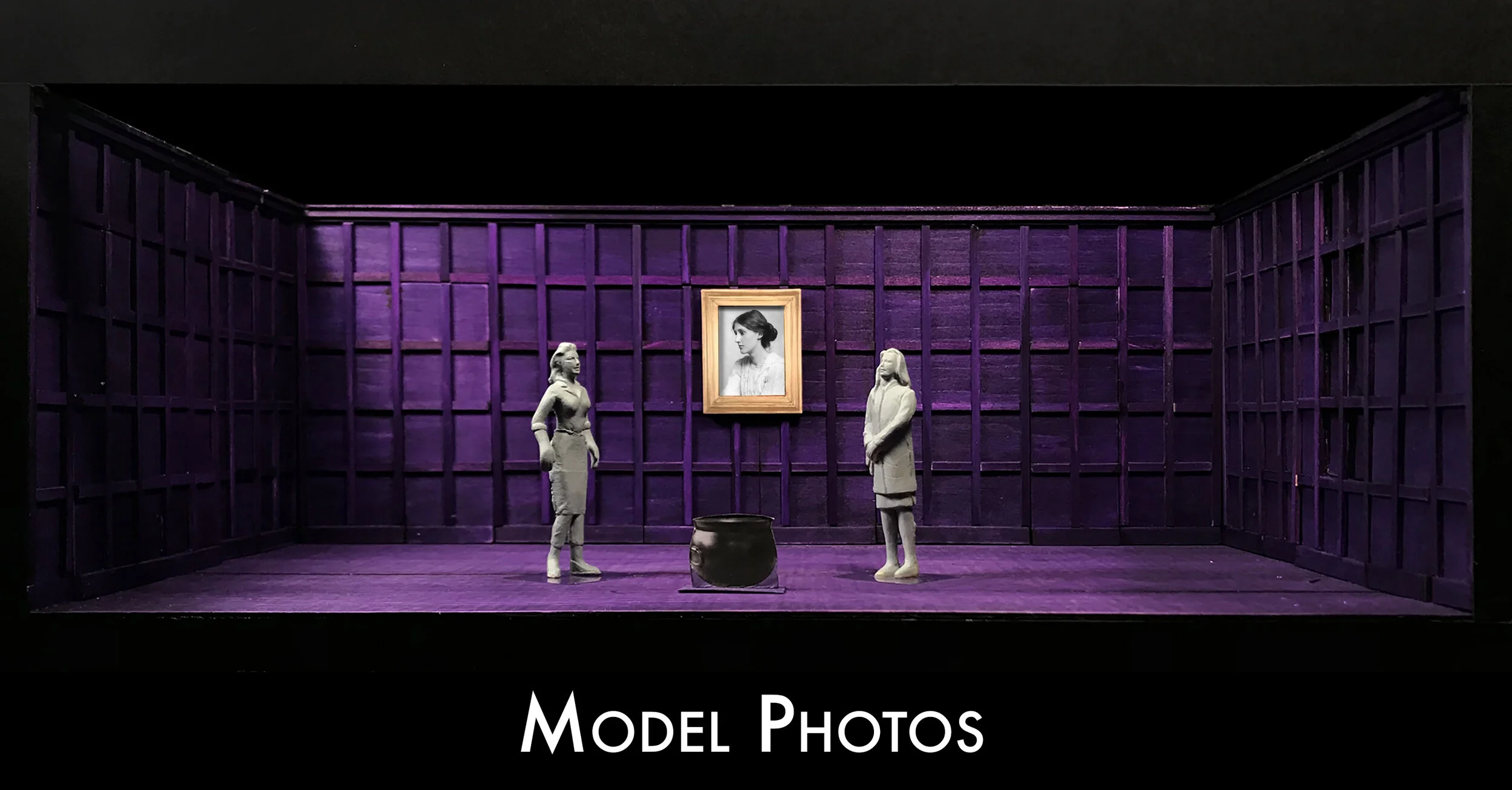
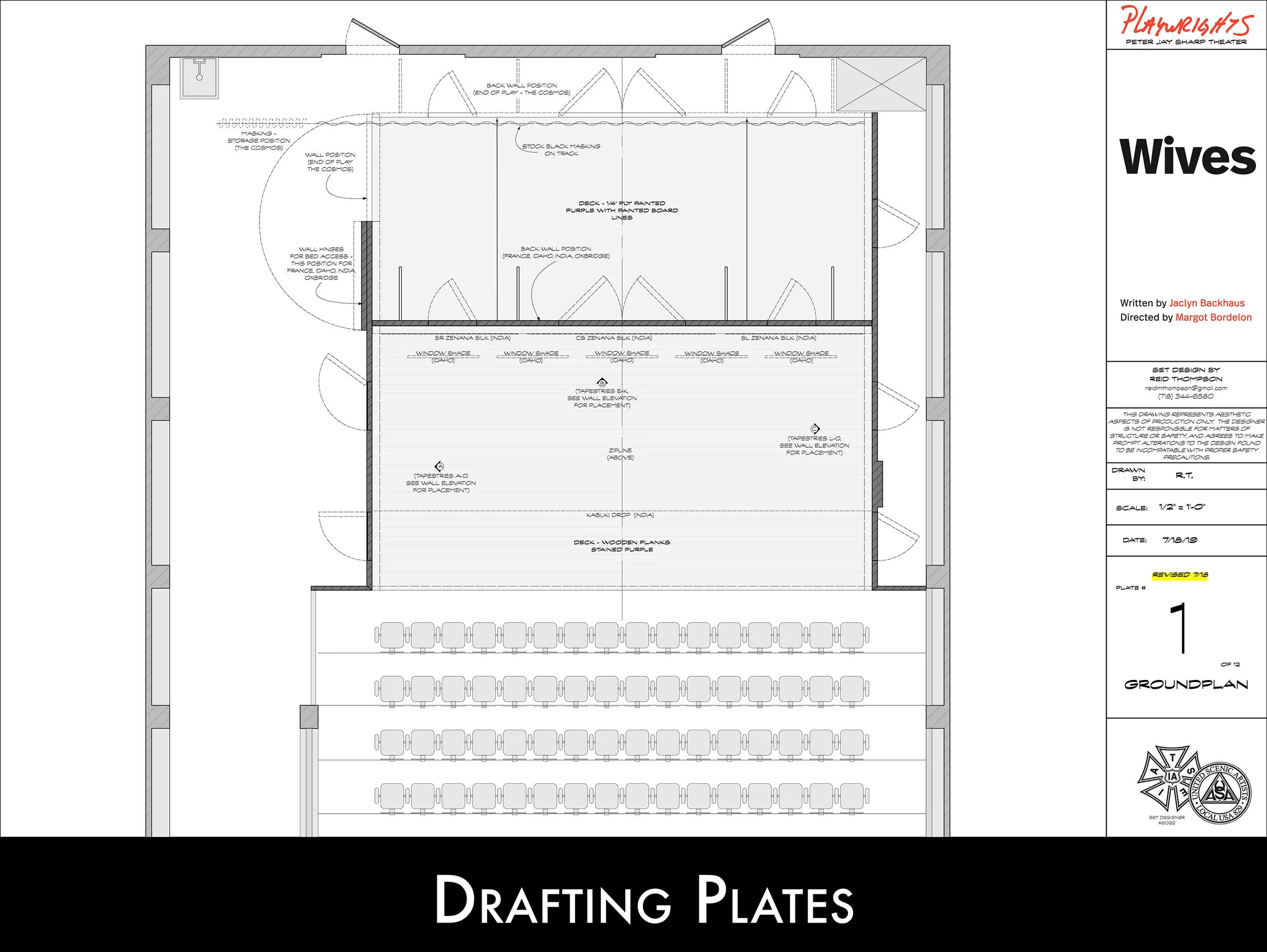
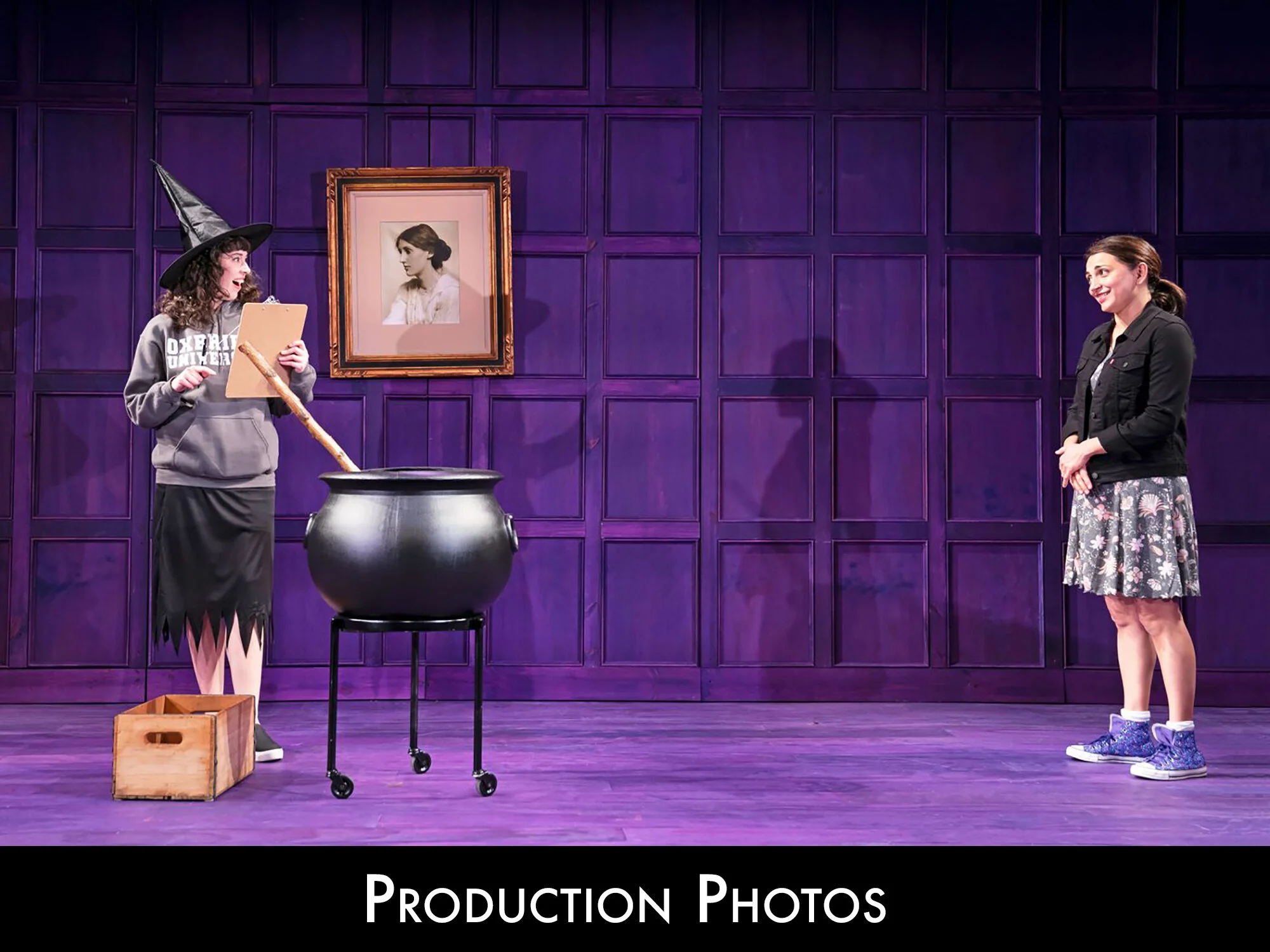
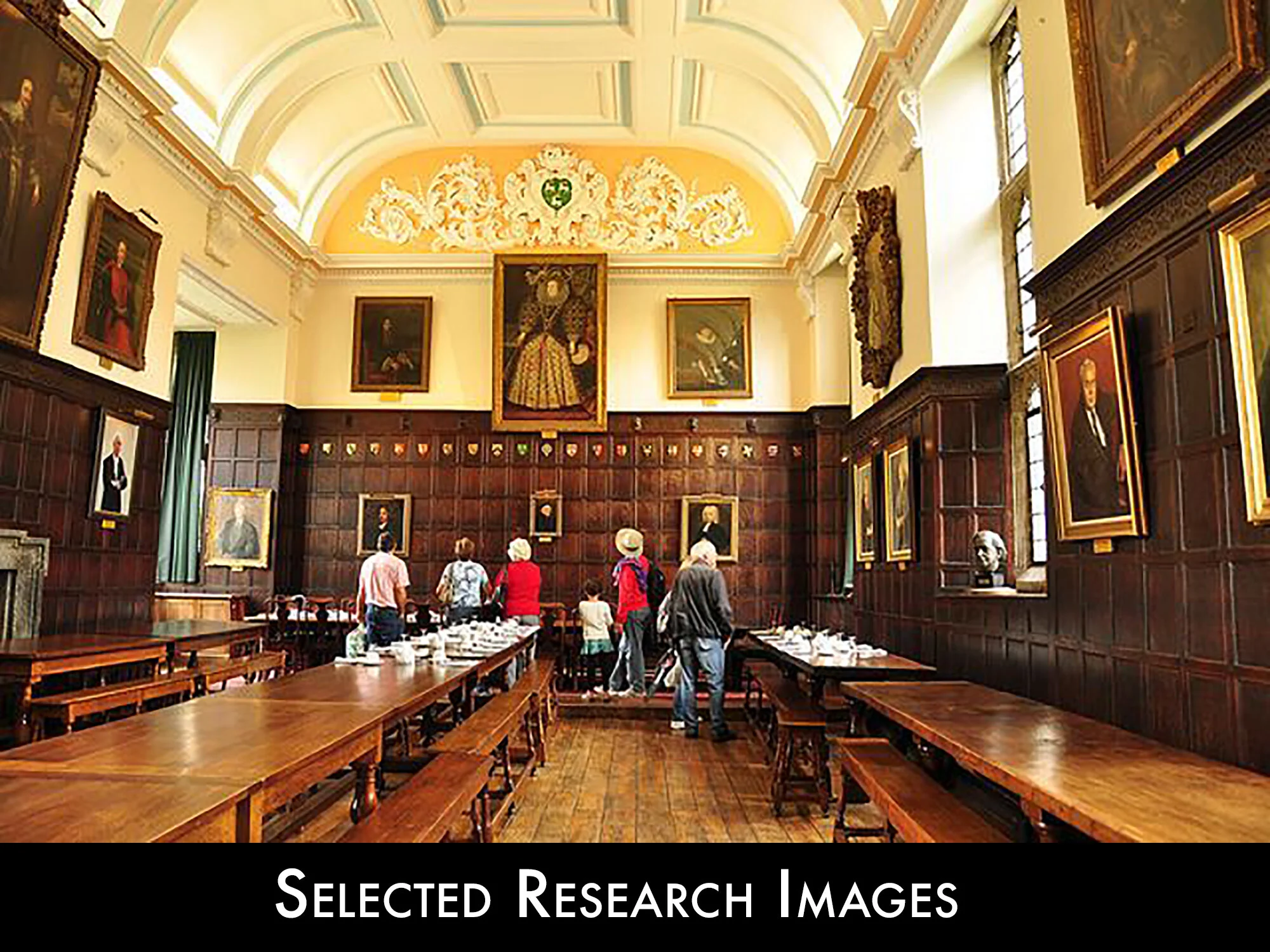
How to describe Jaclyn Backaus’ rollicking new play Wives? Here’s how Playwrights Horizons put it: “From the brawny castles of 16th Century France, to the rugged plains of 1960s Idaho, to the strapping fortresses of 1920s India, all hail the remarkable stories of Great Men! — and their whiny, witchy, vapid, vengeful, jealous wives. In this kaleidoscopic, time-hopping comedy, Jaclyn Backhaus pushes past patriarchal cliché to reach an ecstatic breakthrough, untethering stories and history — and language itself — from the visions made by men.” In approaching the design we wanted something that felt tounge-in-cheek, but also nimble enough to quickly transition between the different locations and time periods the play asked for, without ever dragging the comedy. The play’s final scene takes place in an empty classroom at “Oxbridge University;” and is an exorcism of sorts - as a plastic halloween-store cauldron bubbles under a watchful portrait of Virginia Woolf, one woman conjures her dead grandparents to help her understand her past as she searches for her voice and to realize self-actualization. As so much of the play is about reclaiming male narratives for female voices, the main “container” of the play became a wood-paneled room; familiar to generations of university students from Oxford University in England to Yale University, but instead of the familiar dark wood tones, our room was stained a deep purple - a color associated with femininity, magic, to the night sky. Within this container we had various types of backdrops to indicate where and when we were - France 1591 was indicated by Verdure-style tapesteries, Idaho 1961 by midcentury roll-shades with a paint-by-number landscape, India 1920’s by silk drops, lined in ribbon and tassles, of Indian architecture and patterning. Locations within that time-hopping were indicated simply with tounge-in cheek furniture pieces which rolled on and offstage quickly through hidden doors in the paneled walls. The final reveal of the play was one of space - the back wall of our container tracked back to double the playing space; for the final movement-based sequence.
Directed by Margot Bordelon•Set Design: Reid Thompson•Costume Design: Valérie Thérèse Bart•Lighting Design: Amith Chandrashaker•
Sound Design: Kate Marvin•Photographs: Joan Marcus, Sara Krulwich•Actors: Aadya Bedi, Purva Bedi, Sathya Sridharan, Adina Verson